

Brisbane’s housing market has entered its most aggressive growth phase on record and ended its long-standing appeal as Australia’s “affordable” capital. Recent pricing and transaction data confirms that this market has crossed into a new phase characterised by structural undersupply, collapsing entry-level affordability, and rising pressure on the rental system in general. For data-driven property investors, this shift changes where risks and opportunities are.
The latest PropTrack Home Price Index report shows that Greater Brisbane’s median house price reached $1.178 million in January with an annual increase of 13.1%, which the largest increase recorded for the city. Units even outperformed houses with 18.4% annual increase, reaching value above $1.02 million.
PropTrack economist Angus Moore noted that Queensland has undergone profound affordability shift since the COVID-19 pandemic. With housing prices doubling since 2020, Brisbane changed from one of Australia’s most affordable markets to the third least affordable. Sustained interstate migration, elevated investor participation, and chronic undersupply drive prices up.
While headline price growth attracts most attention, new data highlights that affordability has eroded most sharply at the lower end of the market. Over the past year, only 3.2% of homes sold in Greater Brisbane were priced under $500,000 compared to 4% in Greater Sydney. More than 37% of Brisbane homes now sell over $1 million. Detached houses under $500,000 have effectively disappeared.
While Sydney remains more expensive overall, Brisbane has become more difficult to enter at the lower end of the market, reflecting a significant shift away from its historically “affordable” market position.
As affordability in Brisbane deteriorates, price growth has also intensified across connected outer-metro regions.
In the east coast, Ipswich leads with 17.8% annual dwelling price growth, lifting its median price to $860,000. Redbank Plains, Morayfield, Narangba, and Springfield Lakes are identified as core transactions zones in the $750,000 to $1 million range. In this cycle, price growth is happening at a much faster rate, which means that entry margins are narrowing more quickly.
For rooming house investors, the data points to clear implications.
First, the renter pool is expanding structurally. With entry-level ownership collapsing and even small units becoming expensive, more single-income households and essential workers are being excluded from the traditional housing ownership.
Second, shared accommodation is becoming essential rather than optional. As studios and one-bedroom units stretch serviceability limits, micro-apartments become the next affordability layer.
Third, income resilience now outweighs growth timing. As yields compress in standard buy-and-hold assets, rooming houses remain one of the few residential formats where income can scale independently from capital growth. This provides protection in this affordability-constrained market.
Finally, outer-metro growth corridors align directly with the model. Ipswich, Logan, and Brisbane’s middle-ring suburbs combine lower entry costs, strong renter demand, and planning conditions more favorable to rooming houses.
Affordability pressures in Brisbane are no longer emerging risks. These have become persistent market drivers. In this environment, rooming houses offer a defensive, income-focused strategy as barriers to home ownership increase and rental dependence grows.
Check the PopTrack Home Price Index here: https://www.proptrack.com.au/home-price-index/
ROOMING HOUSE DEAL:
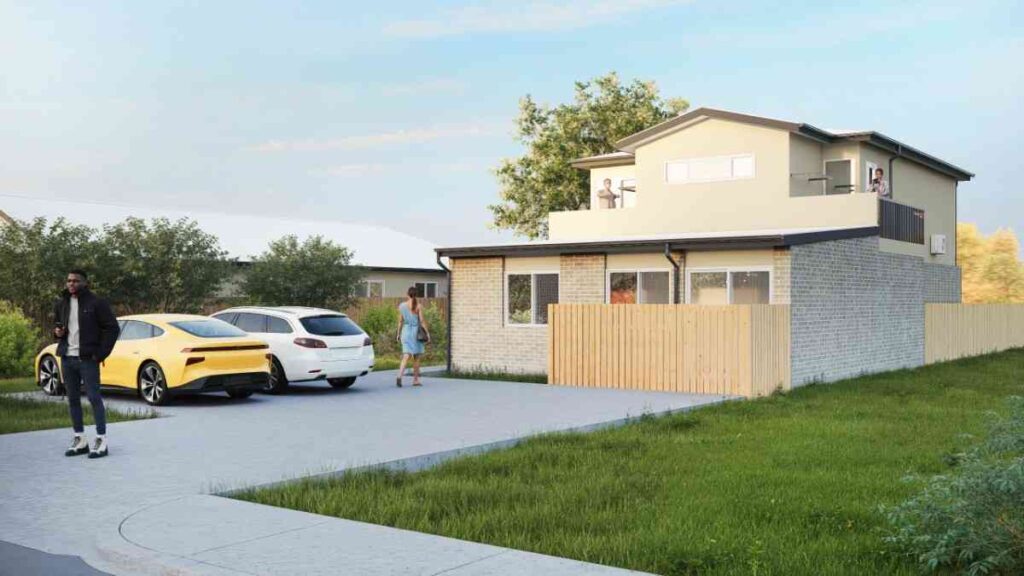
In line with this data, we’re releasing a rare Brisbane rooming house opportunity less than 10km from the CBD, delivering $107K+ per annum and positioned to benefit from this critical two-year window.

Learn More:
Curious about our high yield, high growth, high social impact property investment strategy? Download our strategy document to discover how you can achieve similar results.