Co-Living Brisbane: A Data-Driven Case for High-Yield Property Investment
If you think co-living Brisbane is just low-quality shared housing, you’re misreading one of the most important investment shifts in today’s market.
Smart investors are into co-living investment properties because traditional property is no longer delivering efficient returns.
A 4% to 5% yield may appear stable, but once interest, tax, and holding costs are accounted for, net returns often fall below 2%.
Over time, you’ll feel the difference between a portfolio that works for you and the one you have to keep working for.


Inefficient Use of Capital
Most high-income investors don’t struggle to enter the Brisbane market, but find it hard to scale within it.
These constraints are structural and compounding. Reduced yield limits serviceability. Holding costs erode cash flow before it can be reinvested. Then tax takes another cut. As a result, growth becomes a matter of waiting rather than strategising.
Recent Brisbane data reflects gross yield across traditional assets sit between 3% to 5%. Meanwhile, borrowing costs and operating expenses continue to rise. As margins compress, rental income no longer offset holding costs. As a result, many portfolios begin to underperform and rely con capital growth to justify the hold. Over time, you end up paying for your property and not the other way around.
Limited Cash Flow
Most portfolios are inefficient because of insufficient cash flow.
Low-yield assets limit serviceability. These portfolios become increasingly reliant on external income. You end up paying for your portfolio rather than getting money from it. Over time, you create a portfolio that grows in unpredictable value.
Co-living properties change that equation.
Higher rental density increases total income per asset. In a market like Brisbane, where vacancy is below 1% and demand remains high, this income asset becomes even more effective. Co-living properties can give $100K+ per annum per property. Higher net income improves borrowing capacity, reduces holding pressure, and enables faster reinvestment. This is how portfolios are scaled and fast-tracked.

The Shift is Already Happening
The move toward co-living investment in Brisbane is not driven by sentiment, but by measurable market pressure. Brisbane’s rental market remains critically undersupplied. Vacancy rates continue to sit at around 1% of lower, well below a balanced market.
There is also the significant change in migration. Insights from the latest Regional Movers Index show a growing trend: more residents are leaving Brisbane for regional Queensland to seek affordability. This is not a signal of weakening demand but of pricing pressure reaching a tipping point.
Rents have been increasing rapidly. Over the recent years, rental growth has accelerated to the point where a significant portion of tenants can no longer afford traditional property rentals in Brisbane. For many, relocating to regional areas is the most practical choice.
However, not all tenants are able to leave Brisbane. Employment, infrastructure, community, and lifestyle factors keep them in the city. Moreover, there is a growing proportion of tenants who are single-income earners, young professionals, and essential workers who prioritise location, flexibility, and employment accessibility. This creates a clear gap between where people need to be and what they can afford.
Co-living investments in Brisbane fits these behavioral shifts. Rather than leaving the city, these tenants can remain in Brisbane at a lower cost. Demand for well-located and professionally managed co-living will continue expanding.
Co-Living as Income Architecture
The term “shared housing” is limiting and misleading because it focuses merely on what the property looks like rather than what it actually does.
The old narrative saying that shared housing has lower-quality tenants, higher need for maintenance, and inconsistent income does not represent the modern co-living Brisbane as an investment strategy. In reality, modern co-living investment properties have mostly middle-income tenants who are young professionals and essential workers. Property management is mostly done by professionals. Income, coming from multiple tenants, is more stable because of reduced vacancy risk.
At its core, co-living is an income optimisation model. Instead of having one tenant and single income stream, co-living investment properties generate multiple income streams within a single asset.
Modern co-living Brisbane should not be reduced to “shared housing” but viewed as a diversified, resilient income-generating investment designed to maximise yield and reduce risk in today’s evolving rental market.
Co-Living: High Quality Dwelling
The assumption that co-living properties are low-quality is based on outdated models that no longer represent this segment.
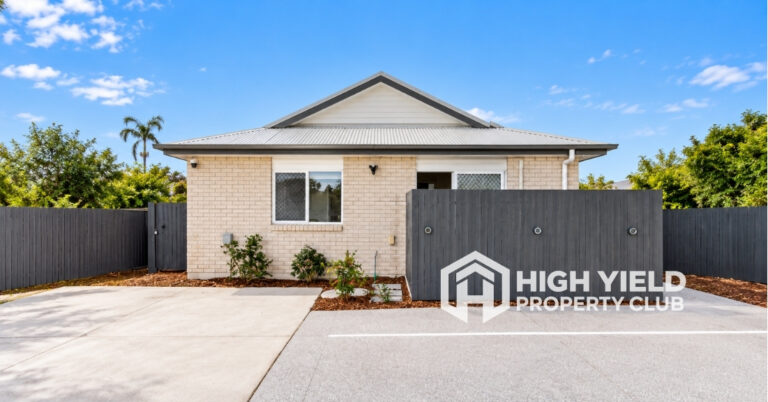
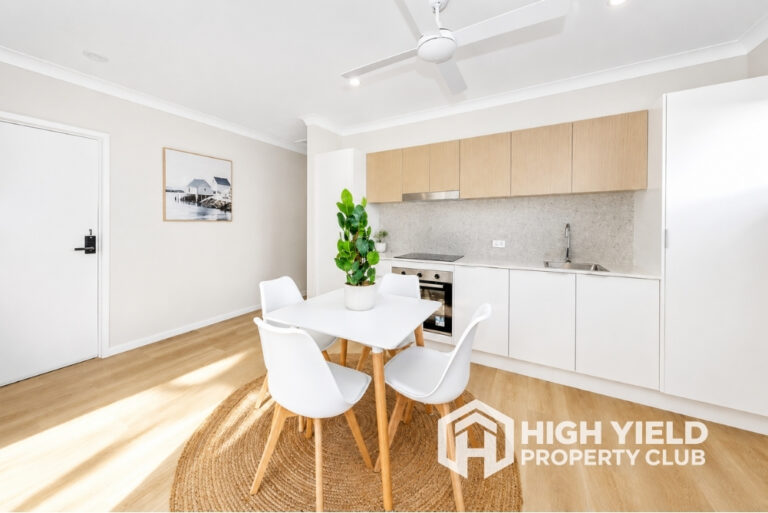
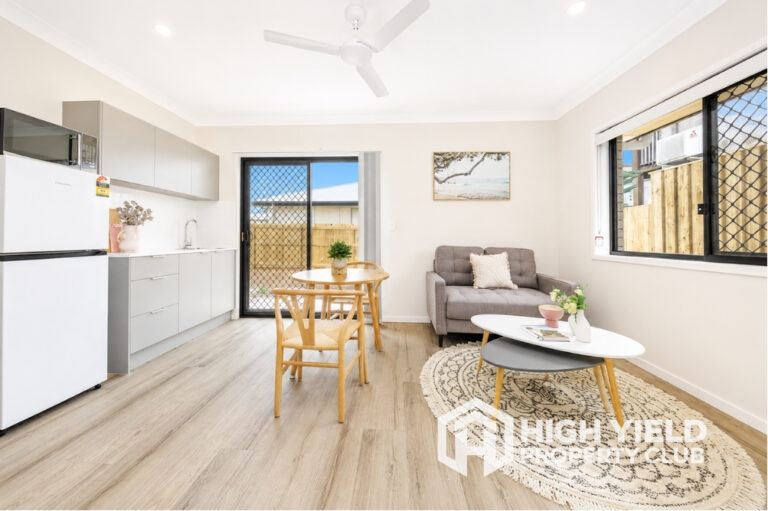
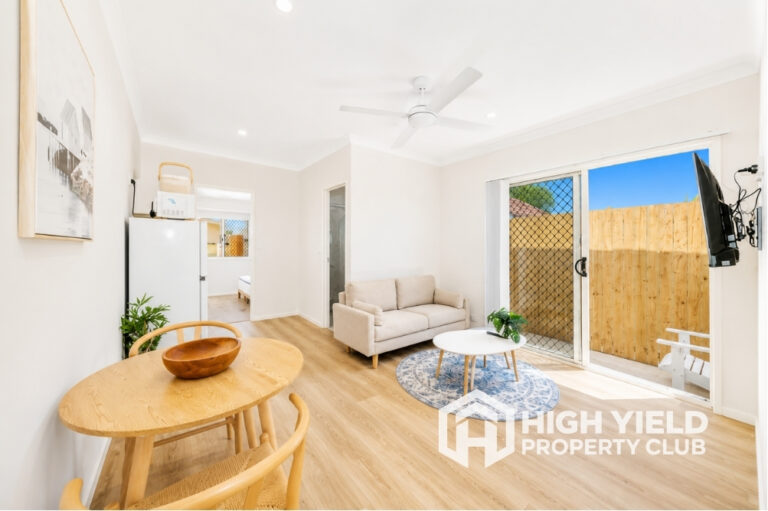
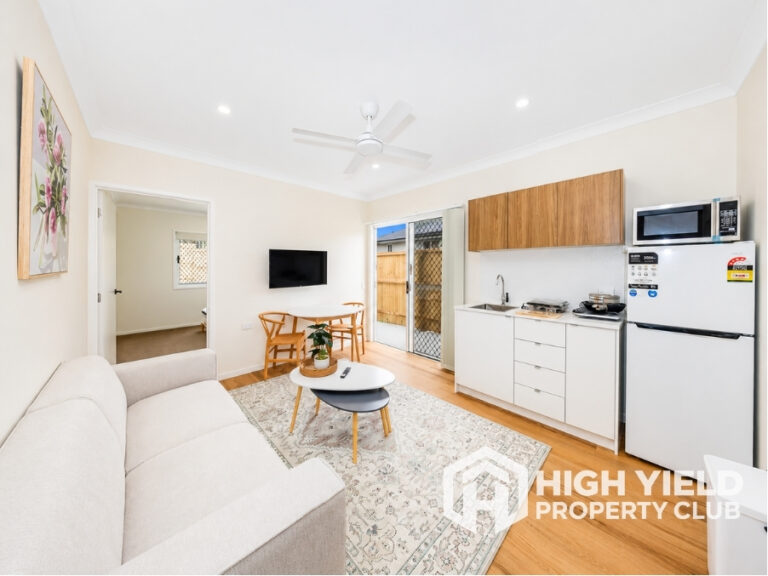
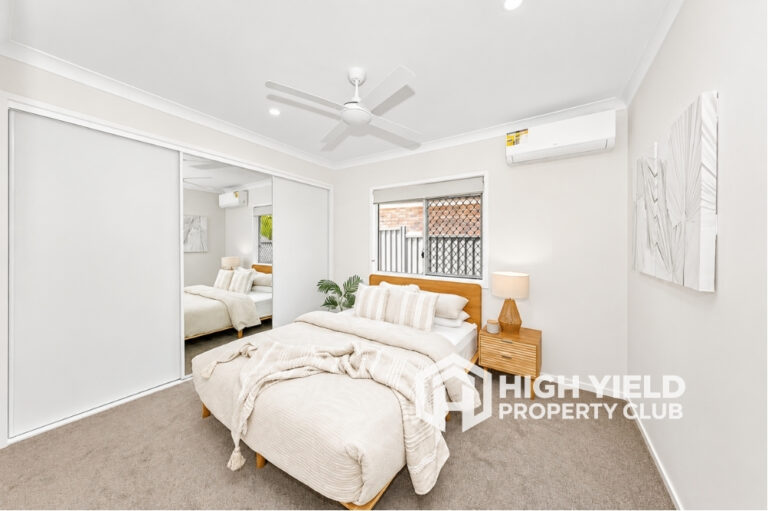
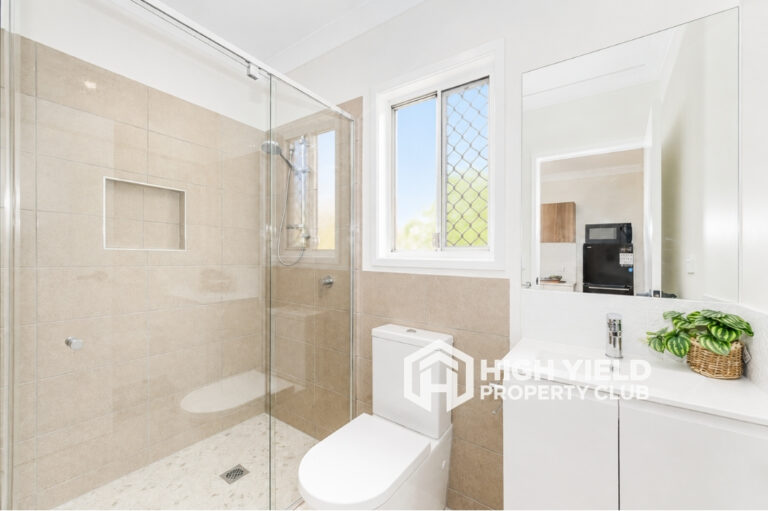
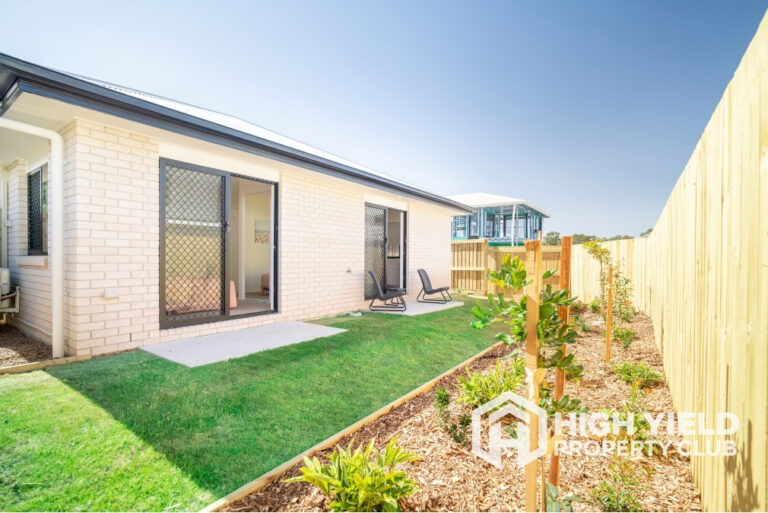
Modern co-living properties in Brisbane are purpose-built with private lockable rooms with ensuite, lounge, kitchenette, and small dining area. There are also professionally designed common areas such as full kitchen, spacious dining, and laundry area. Modern co-living Brisbane are fully furnished and professionally managed. They are not improvised or make-shift share houses, but intentionally built for private co-living environments.
The tenant profile reflects this shift.
Modern co-living occupants are typically young professionals, healthcare workers, and essential workers working within Brisbane’s main employment hubs. These tenants value job accessibility, affordability, and secured lease.

Active Equity Uplift and Risk Distribution
Traditional property investment is largely passive. You buy, hold, and wait for market appreciation.
Co-living Brisbane introduces a different relationship with value.
As rental income increases, valuation methodology adopt income-based approaches. This means that asset value becomes closely linked to its operations which favor cash flow. In Brisbane’s current rental market, characterised by strong rental demand and significantly low vacancy, this dynamic becomes even more powerful. Rather than relying purely on market movement, your property’s value will be influenced by its income optimisation function. This highlights the difference between passive market exposure versus active value creation.
Another advantage of co-living Brisbane investments is distributed risk. The perception that co-living properties have higher risks is based on outdated assumptions.
In today’s market, traditional properties may carry higher risks. For one, income depends on one tenant. Vacancy results to zero income.
In co-living properties, rental income is distributed across multiple, unrelated tenants. Vacancy may reduce income, but does not eliminate it. This income structure creates a more reliable and resilient cash flow from your property.
Other risks such as compliance, financing, build quality and property management are identifiable and manageable. It is best to work with experienced co-living builders and property investment consultants and coordinators in the Brisbane market.
Co-living Brisbane Done-for-You
High-yield strategies tend to require more time and work. This is why many time-poor investors choose passive investments.
The structure of co-living investments in Brisbane has evolved to “done-for-you” method.
Co-living investment property specialists handle the land acquisition, approvals, construction, tenant placement, and property management. Beyond ensuring full regulatory compliance, this specialised approach streamlines execution, minimizes delays, and accelerates project completion, allowing the asset to generate income sooner, because in this model, “time is money.”
This allows time-poor investors to access high-yield assets without the need for overwhelming time, effort, and involvement.

Where the Market Sits Now
Co-living Brisbane is still early in its growth cycle, which also means that first movers have an advantage. The broader Brisbane market is already showing strong fundamentals: low vacancy rates, strong population growth, rising property prices, and persistent housing undersupply.
Even so, co-living Brisbane properties remain largely under-utilised and misunderstood by the market. Most investors are limited by outdated assumptions. Meanwhile, a smaller group of informed investors are already repositioning toward more efficient income models.
Final Perspective
Co-living investments in Brisbane are no longer a fringe strategy, but an efficient response to a changing market. The data is clear: higher yields, stronger cash flow, and more predictable equity outcomes. The remaining gap is not performance, but perception. Investors who act on data, rather than outdated assumptions, are able to place themselves earlier in the cycle.
Investors who move now capture both yield and positioning. Those who delay will enter a more competitive, normalised market.
Reposition yourself for higher yield, stronger cash flow, and scalable growth.