









Rooming Houses Redland Bay: A High-Yield Opportunity in Brisbane’s Coastal Growth Corridor
Redland Bay is increasingly becoming a high-yield location for investments in Southeast Queensland. Positioned along the southern coastal corridor of Redland City and within commuting distance of Brisbane, the suburb benefits from rising property values, strong population demand, and tightening rental supply. Moreover, increasing smaller households and ageing population push the demand for smaller and more affordable housing options like rooming houses.
However, the existing housing stock in Redland Bay is heavily dominated by large detached homes. Across the Redlands region, more than 85% of dwellings contain three or more bedrooms.
As a result, many smaller households, including singles, couples without children, essential workers, and downsizers often end up renting larger and more expensive accommodations. This mismatch between the available supply and actual demand contributes to the growing housing affordability crisis and intensifying rental stress in the suburb. For investors, this imbalance creates a potential opportunity for alternative housing formats such as compliant rooming houses in suitable locations within Redland Bay.

Government Housing Strategy and Planning Direction
Redland City Council formally acknowledged the growing imbalance between the existing housing supply and actual housing needs in its Redland Housing Strategy. The strategy highlights Redland’s significant shortage of smaller dwellings catering the increasing number of small households.
Across most suburbs in the region, the ratio of small household to small dwelling is above 3.5, which indicates undersupply of smaller housing options. This means that many small households are forced to rent or purchase larger dwellings.
Housing affordability has become a growing concern. Approximately, 36.5% of rental households in Redlands are currently experiencing rental stress because they spend more than 30% of their income on rent. If smaller and more affordable housing options are available, many renters could lower their housing costs and reduce their rent burden.
The Redland Housing Strategy identifies the need for greater housing diversity to address this imbalance.
The strategy encourages alternative housing needs such as co-living arrangements, shared-housing, build-to-rent, and many other micro-housing options like rooming houses.
These recommendations reflect a broader planning direction aimed at delivering housing that better matches the changes needs of the community. While the strategy highlights the importance of alternative housing models, the practical implementation of these ideas still depends heavily on local planning controls and approach towards rooming houses. In practice, Redland City Council remains cautious when assessing rooming house developments, especially in established suburban areas like Redland Bay. Proposals for rooming accommodation are often carefully scrutinized to ensure they align with neighborhood character, infrastructure capacity, and community expectations.
For investors, this means rooming houses can still work in Redland Bay, but success depends heavily on the right zoning, site selection, and design that meet council rules. Working with an experienced rooming house builder Redland Bay can help navigate planning requirements and improve likelihood of approval, compliance, and high yield.
Demographic Drivers: Ageing Population and Smaller Households
Redlands has a transforming demographic profile that increasingly needs alternative, especially smaller, housing formats.
The average age of residents is 42 and the largest and fastest-growing age group is aged 65 and above. This reflects a growing population of older residents who may begin to downsize from larger family homes into smaller, lower-maintenance accommodations.
At the same time, smaller households are becoming more common in Redland Bay. Many residents now live alone or in two-person households. However, the housing supply has not kept pace with these demographic changes.
With more than 85% of dwellings in Redland Bay containing three or more bedrooms, there are limited choices for singles, couples, younger renters, or older residents seeking smaller accommodation. This shortage of appropriate housing options increases demand for alternative housing formats providing smaller and affordable accommodations.
Rooming houses provide a solution by offering private micro-apartments with shared amenities and affordable rent relative to average income. They are a highly sought-after accommodation for single-income households, essential workers, retirees, and downsizers.
Employment Catchment and Commuter Demand
The Redlands region is strongly connected to the wider Brisbane employment market. Approximately 40% of employed residents commute to Brisbane City for work. This means that aside from smaller accommodations, transport connectivity is also crucial for many residents.
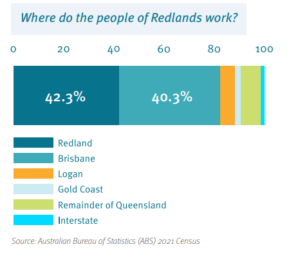
Within the Redlands region itself, employment is concentrated in the key centres of Cleveland and Capalaba, which account for around 43.8% of residents who both live and work in the region. These areas have most of the major employers including Redland Hospital, Redland City Council, and many other retail and service businesses.
The health care and social assistance sector is the largest source of employment in Redlands, providing 18.2% of all jobs in the region. Many workers in this sector prefer to live close to their workplace.
The workforce composition also includes a large proportion of technicians, trade workers, and labourers, who make up around 25% of the Redlands workforce. Many of these workers require accessible housing close to employment hubs and transport stations.
Property Market Performance and Capital Growth
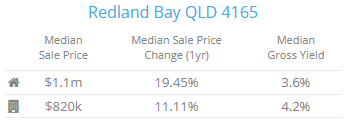
Property values in Redland Bay and surrounding suburbs have also experienced strong growth in the recent years, which reinforces its attractiveness to property investors.
For investors, this level of price growth signals strong demand and continued confidence in the local property market. At the same time, rising property values and constrained housing supply continue to push rental prices. This creates opportunities for investors who can deliver more diverse and affordable housing options that align with the needs of the region’s growing population.
Rental Market Strength and Housing Stress
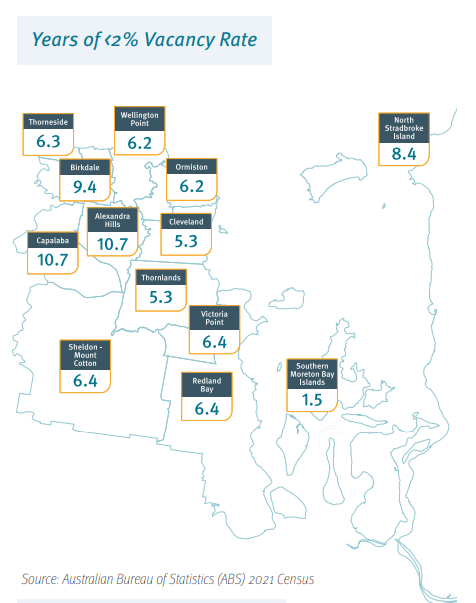
The Redlands rental market has remained tight for several years. Vacancy rates across mainland locations have generally remained below 2% for more than five years, which indicates persistent housing shortages.
The shortage is evident in the lower end of the rental market. Smaller households often struggle to find affordable rental options because the available housing stock are mostly large family homes.
Affordability is increasingly challenging because rental prices have increased faster than household incomes. More than one-third of rental households in Redlands were experiencing housing stress, and this pressure has likely increased since then.
Survey results from the Redland Housing Strategy report that approximately 75% of residents who needed to move to a different type of home to upsize or downsize, were not confident that they could find a property in Redland Bay to suit their need.
These trends highlight both the growing mismatch between housing supply and the needs for smaller and more affordable dwellings in the Redlands.
Why Rooming Houses Fit Redland Bay’s Demographic
Redland Bay’s demographic profile aligns closely with the typical tenant profile seen in HYPC rooming houses, especially in terms of age and employment.
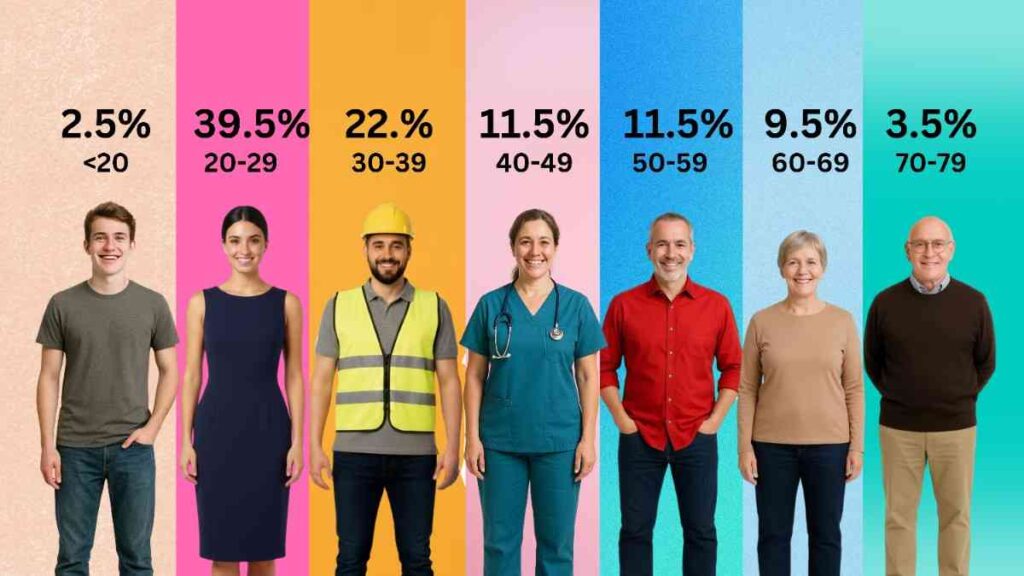
Tenant demographic data from HYPC rooming houses shows that the majority of residents are young working adults. Redland Bay’s demographic profile, where the average age is around 42, indicates that the community is largely made up of working-age residents. These age groups typically include early-career professionals and essential workers who often prefer affordable, flexible accommodation rather than renting larger family homes.
In addition to the working-age population, the fastest-growing demographic in the Redlands is residents aged 65 and above. This group is also represented among HYPC rooming house tenants, particularly retirees and older individuals seeking affordable, low-maintenance housing options.
Likewise, the employment structure of Redland Bay also aligns closely with the tenant profile typically seen in HYPC rooming houses. Across the Redlands region, major sources of employment include healthcare and social assistance, retail and service industries, construction and trades, and administrative or office-based roles. Healthcare is one of the largest employment sectors in the region, supported by nearby facilities such as Redland Hospital, while retail and service jobs are concentrated in centres like Cleveland and Capalaba. At the same time, a significant portion of the local workforce is made up of technicians, trades workers, and labourers.
The tenant mix typically seen in HYPC rooming houses aligns well with both the employment structure and the evolving age demographics of Redland Bay.

What It Means for Rooming House Investors in Redland Bay
For property investors, Redland Bay presents a combination of strong demographic demand, tightening rental supply, and long-term growth potential. The suburb sits within a region where housing supply is mostly large detached homes with more than three bedrooms, which are larger and more expensive than smaller households and older residents need and afford.
At the same time, Redland Bay benefits from proximity to Brisbane, with strong local employment hubs, and a workforce largely made up of essential and service-sector workers requiring affordable accommodation in workplaces.
Although Redland City Council maintains cautious approach to rooming house developments, opportunities still exist for well-planned and compliant projects in suitable locations. With careful site selection, appropriate zoning, and thoughtful design, rooming houses in Redland Bay can capture strong rental demand while supporting the region’s growing need for smaller and affordable housing options.